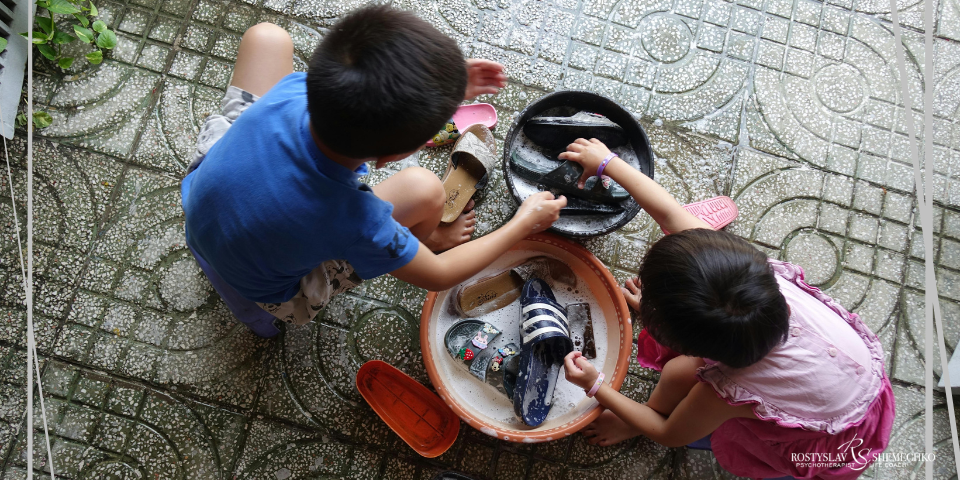
Asking your child for help isn’t about delegating chores. It’s an invitation to belong, contribute, and feel trusted. Done well, it strengthens security, builds competence, and deepens your bond.
Do:
 Match the ask to their age and capacity: “Can you hand me the spoon?” (toddler) vs. “Would you be willing to help me brainstorm how we’ll get everyone ready for school tomorrow?” (preteen). Name the why: “It helps me feel calmer when we work together,” or “Your ideas really matter to me.” Make it relational, not transactional: Frame help as shared meaning, not performance: “I love doing this with you,” not “If you do this, then…” Honour their ‘no’: A respectful decline is part of learning boundaries – and reinforces that your relationship isn’t conditional on compliance.
Avoid:
 Vague or emotionally loaded requests (“Be helpful!”, “Why can’t you ever pitch in?”)Asking for emotional labour beyond their developmental level (“Make Mommy happy,” “Don’t make Daddy stressed”)Withholding warmth or connection when they struggle or say no.
When children experience being capable, wanted, and safe in their contributions, they internalize: I am someone who belongs. My presence matters.
That’s therapy-grade parenting – quietly, daily.
Schedule a consultation with Rostyslav Shemechko by calling 647-866-9061 or info@shemechko.com if you need help or advice.